

“Sustainable development is how we must live today if we want a better tomorrow.”
— United Nations
What Does Green Living Really Mean?
We hear the word green everywhere. Green products, green energy, green buildings, green living. But what does it actually mean to live green?
At its heart, green living is about sustainable living—recognizing that we are part of the natural world and that the choices we make are connected to everything around us.
Green and clean naturally overlap, but they give us slightly different ways of looking at that relationship.
Green asks how we can live well as part of the living Earth—using resources wisely, protecting habitats and biodiversity, and meeting human needs without unnecessarily damaging the natural systems that sustain us.
Clean asks us to pay particular attention to what we put into the natural world and what we leave behind—and how those things affect the living world around us.
Something can easily be both green and clean. The distinction isn't meant to draw a line between them. It's simply a useful way of looking at the same interconnected world from two directions.
We Are Part of Nature Too
Living in greater harmony with nature may begin with learning to live in greater harmony with our own nature.
Being part of nature isn't just a figure of speech. Our bodies are made of the same physical materials as the Earth and its other living creatures. We breathe its air, drink its water, and depend upon the living Earth for the food that nourishes us.
And we are animals ourselves. Perhaps there is something more—a spark? Whatever else we may be, we are at least in part animals.
We are physical, sensing, feeling creatures. Our bodies, senses, emotions, and instincts are part of how we experience the world.
We also have remarkable minds that can reason, study, measure, question, learn, and teach. Sometimes modern life keeps us so busy and so much "in our heads" that we forget to pay attention to what our senses, bodies, and emotions are telling us.
What does the air smell like? How does it feel in our lungs? Does the soundscape around us leave us feeling peaceful or agitated? Are our shoulders tightening? Is our breathing changing? Does something we see make us want to move closer—or turn away? Does it touch us emotionally before we've even found words for what we're feeling?
Although our bodily and emotional responses don't tell us everything or replace evidence and reason, they give us important information.
Discomfort may lead us to investigate and discover a real problem. Is sadness telling us something matters—within us, around us, or perhaps both? Joy may draw our attention to something worth appreciating, preserving, or protecting. Are our senses and emotions reminding us to notice something we've been overlooking?
Although we don't have to obey every feeling or impulse, neither do we have to immediately silence them.
We can notice first. Then we can become curious.
What is my body telling me? What am I feeling? Why might I be responding this way? What can I learn?
Since we are animals, at least in part, paying closer attention to our own senses and instincts, just as other animals do, gives us more information with which to make choices.
We can encourage that awareness in children too. What do you hear? What do you smell? What creatures live here? How does this place feel? What changed?
Paying attention can be the beginning of caring.
Everyday Choices
Living green can begin with ordinary choices. Turn off a light we're not using. Conserve water. Reuse something instead of replacing it. Walk when we can. Plant something. Learn about the wildlife around us.
And we can look at what's on our plates.
Food connects us directly to the Earth every day. Before something reaches our plate, land, water, energy, plants, animals, people, transportation, and packaging may all have been involved.
We can pause and wonder: Where did this food come from? What did it take to produce it? What's in it? If an animal was involved, how was that animal treated? And what happens inside me when I stop and think about that?
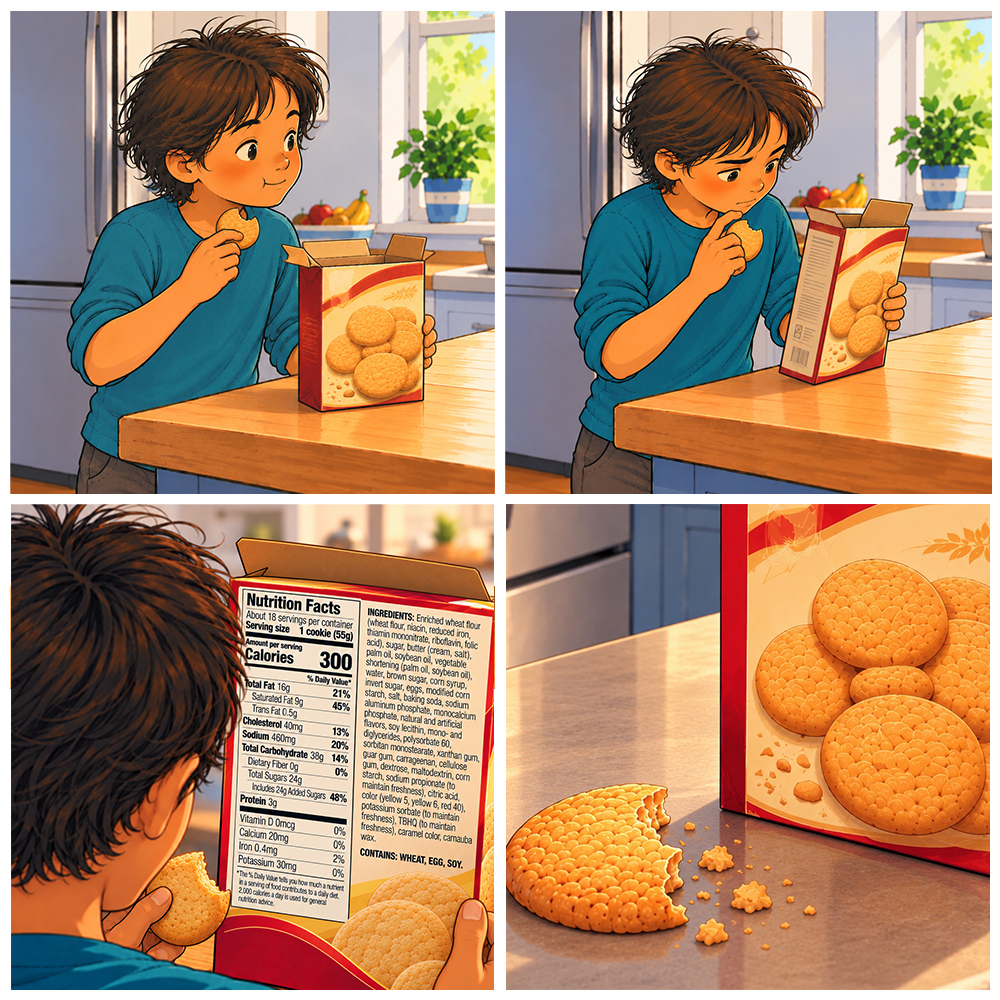
We can read an ingredient label. Notice how food tastes and how our bodies respond to it. Does it nourish us? Does it leave us feeling comfortable and energetic, sluggish or unsettled? We can throw away less food and eat more plant foods, which often require fewer resources to produce. And we can investigate: How was this food grown or produced?
We don't have to become perfect eaters. What's on our plates gives us an opportunity, several times every day, to connect something very personal with something much larger.
Paying attention gives us a chance to make more conscious choices rather than simply accepting whatever is put before us.
Our Choices—and Our Systems
The larger systems we participate in—food, energy, transportation, technology, industry, buildings, and communities—shape our relationship with the Earth and give us more choices to examine.
What resources do these systems require? What happens to the land, water, ecosystems, wildlife, and people affected by them? What do they leave behind? Is there a greener way to accomplish what we need to accomplish, with less harm and suffering?
New ideas and better technologies can help us use fewer resources, produce less waste, and protect ecosystems while meeting human needs. So can protecting forests, wetlands, rivers and streams, lakes and oceans, deserts, dunes, and other natural habitats—including places that may appear empty or inconsequential to us but are part of complex living systems.
No single issue defines what it means to be green. They are interconnected.
And none of this requires perfection.
That's an important part of the Good Goose philosophy. Green living isn't about changing our whole lives overnight or feeling overwhelmed by what we aren't doing. It can help us become more aware of what we can do.
Plant something. Use something again. Waste a little less. Learn where your food comes from. Spend time outdoors. Notice another living creature.
Listen. Look. Breathe. Feel.
And when something catches our attention—because it troubles us, brings us joy, or simply makes us wonder—we can pay attention to that response and become curious about why. Our feelings don't give us all the answers. They can alert us to something we may want to understand more deeply.
We are not separate from the natural world we are trying to protect. We belong to it.
Living green is about remembering that connection and learning to live with greater awareness and care—for the Earth, for other living beings, and for ourselves.